
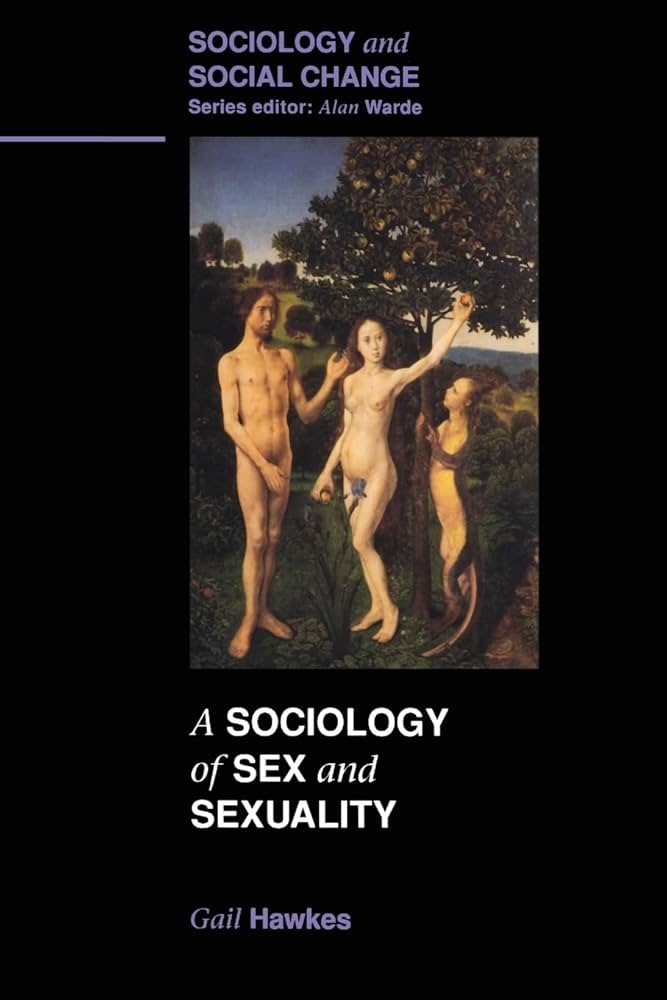
Every person has their own values and morals surrounding the topic of sex. In the book,“A sociology of sex and sexuality”(Hawkes, 1996) by Gail Hawkes, goes into depth on this topic of the “specialness of sex” we see in modern society. Hawkes describes there to be two different perspectives on the “specialness of sex”. One perspective is the fear of sex where someone has a negative association with sex in general. They may believe sex is shameful, taboo, or dangerous, or they can interpret sex as a wrongful act or something bad. They could also be fearful of getting hurt, fearful of relationships, or just fearful of biological hazards. There are many fears a person can have towards sex. However, this is exactly what makes sex so “special”. If an individual who holds this fear of sex, decides to overcome it with a trusted partner, they have now had a milestone experience that they will likely never forget. It reveals that they have decided to share that fearful moment with their partner, to trust their partner, and to be their most vulnerable selves. While the fear of sex has negative associations and impacts on people’s lives, it still proves the significance, value, and “specialness” of sex.
The other perspective is the fulfillment and happiness of sex where someone has only positive associations with sex. Someone may feel comfortable exploring their sexuality, having discussions on the topic of sex, or being open to new sexual experiences. They also may think of sex as a way to show their love, a romance, or a form of self-expression. The fulfillment and happiness of sex allows people to express and explore their sexuality freely without feeling self-judgment. While to some people in society this may be a “careless” way of treating sex, it can also be seen as natural, freeing, and fulfilling. Someone finding fulfillment and happiness in sex does not take away its “specialness”, it only enhances the romance, love, pleasure, and fulfillment they find in sex.
In today’s society, we see how sex is intertwined in our laws, media, politics, everyday norms, and religions. No other activity such as eating, sleeping, or exercising has had such an influence on our society’s culture and beliefs. It is because of this “specialness of sex” Hawke describes, as to why our legal system has taken necessary measures throughout history because as a collective we believe it is a private act where both parties should be deemed to have personal autonomy. Some fears of sex are a devastating reality, and legal measures are necessary to ensure social order and safety. In modern society, sex is heavily involved in our media, seen or discussed on social media, TV shows, movies, and music. Over time, modern society has gradually accepted sex in our media. I think there is a positive perspective to this, where someone can use it as an educational opportunity to learn what to do, and what not to do. However, there is always the negative perspective to sex being heavily involved with our media where minors could be exposed to seeing or hearing things they should not, being a minor. Religious beliefs have had a significant influence on sex, and how it is viewed in society for centuries. Many people who grew up with a fear of sex, may have had religious trauma, where they were taught sex was criticized and shamed if it was done outside of marriage. We can still see the effects the Christian church has had on Western civilization, specifically, Western beliefs and values surrounding sex.
The place I was born and raised, Las Vegas, has a unique experience of Hawke’s description of the “specialness of sex”. Las Vegas is known worldwide to be “Sin City”, where people say “what happens in Vegas, stays in Vegas”. Those notorious sayings give insight into how much sex and sex entertainment are involved in the reputation of the city. To tourists, we are the perfect city to come party, go to strip clubs, gamble, and have a bachelor/bachelorette’s party; they come to have the time of their lives. While you may think Las Vegas mostly experiences the side of fulfillment and happiness in sex, we are equally involved in the fear of sex. Las Vegas is partially economically dependent on sex entertainment, yet sex workers such as strippers are looked down upon and judged by society. It is also clear that in both notorious statements about Vegas, the experiences are something to hide, to be ashamed of, and aren’t seen in a necessarily positive light people may assume it has. Las Vegas has a unique, yet insightful experience with how its society views sex, however, it all comes down to the individual. A person’s environment, beliefs, and experiences will determine whether they find fear or fulfillment in sex.
Citations
Hawkes, G. (1996). The sociology of sex and sexuality. Open University Press.
 An educational weekly blog post on sex and sexuality in sociology. A college students perspective and insight on her SOC 449 university class.
Leave a comment